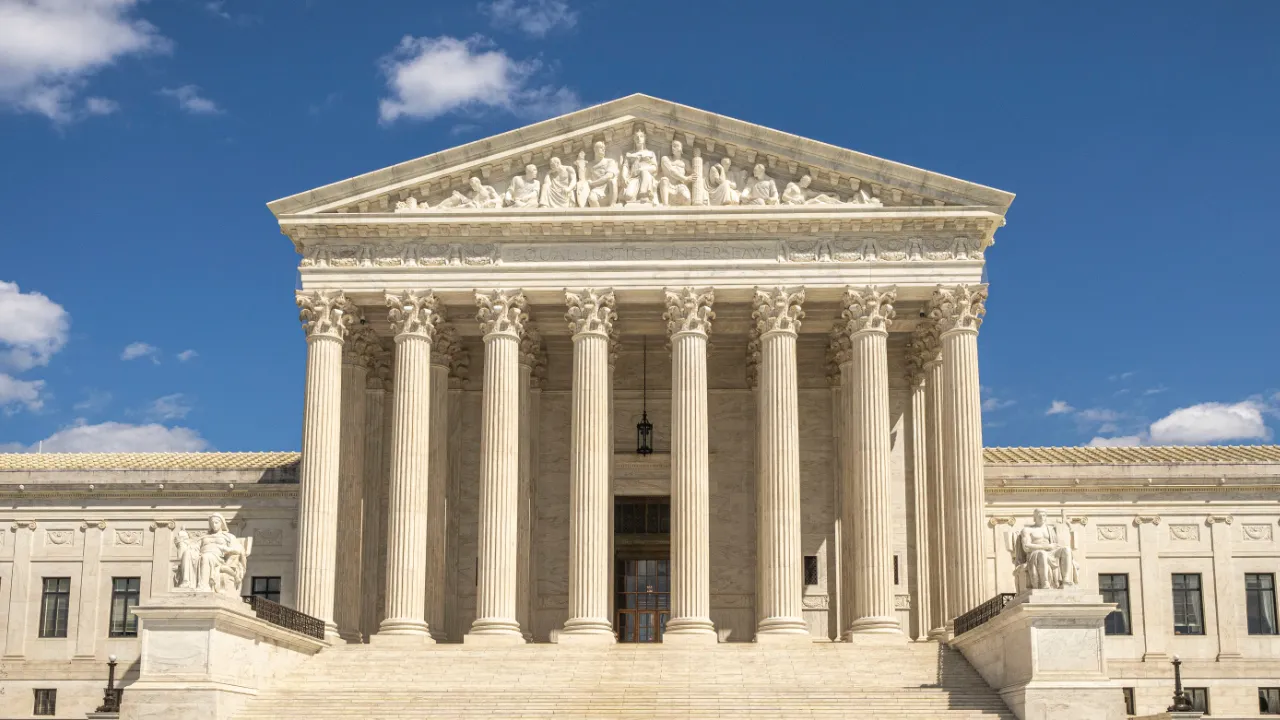
On June 25, 2026, the U.S. Supreme Court, in a 6-3 decision written by Justice Samuel Alito, agreed with the Trump administration and held that the U.S. Department of Homeland Security can turn back asylum seekers at the border. In this post, we will discuss the case, Mullin v. Al Otro Lado, No. 25-5, 609 U.S.(2026), its background, and its likely significance.
- The Court held that asylum seekers must be physically inside the United States to qualify as having “arrive[d] in” the country and apply for asylum.
- The ruling revives the metering policy, allowing Department of Homeland Security officers to turn back asylum seekers who are still outside U.S. territory.
- Dissenting Justices, including Justice Sonia Sotomayor, warned the decision creates a perverse incentive to cross the border illegally and take greater risks.
Mullin v. Al Otro Lado: Background and the Metering Policy
How Asylum Worked Before Mullin v. Al Otro Lado
The United States has a long history of providing protection to those who fear persecution in their home countries. The main way it does so is through a form of protection called asylum, which exists to ensure that individuals who have a fear of persecution in their home countries are not forced to return there.
Asylum is preserved in federal law at 8 U.S.C. § 1158(a)(1), which says:
“Any alien who is physically present in the United States or who arrives in the United States (whether or not at a designated port of arrival and including an alien who is brought to the United States after having been interdicted in international or United States waters), irrespective of such alien’s status, may apply for asylum.”
Traditionally, asylum seekers – before physically entering the U.S. – could express to a border agent at a border, airport, or other port of entry that they intend to seek asylum, and they would then be screened and allowed to initiate the process of applying for asylum from within the U.S.
How the Metering Policy Began and Ended
In November 2016, under the Obama administration, the Department of Homeland Security (which oversees U.S. Customs and Border Protection, or CBP) started a policy of “metering,” which involved border agents preventing asylum seekers from entering the U.S. This policy was continued under the Trump administration.
Metering is no longer in effect. The Biden administration rescinded the policy in November 2021, more than four years before the Supreme Court ruled on it. Because the policy had already been withdrawn, the Court first had to decide whether there was still a live dispute for it to resolve. It concluded that there was, relying on the government’s position that it would likely resume metering in the future if conditions at the border warranted doing so.
Justice Ketanji Brown Jackson disagreed on this point. She wrote a separate dissenting opinion arguing that the Court had issued an advisory opinion on a policy that had not been in place for almost five years and that the government had no concrete plans to reinstate.
The Al Otro Lado Lawsuit and the Ninth Circuit Ruling
Al Otro Lado, an immigrant rights organization, along with several asylum seekers, sued the government in 2017 in order to stop its policy of metering. They argued that metering illegally prevented asylum seekers who had arrived at the border but had not entered the U.S. from being able to apply for asylum in the U.S. The district court agreed that the policy is illegal, and the Ninth Circuit affirmed the decision.
The Question Before the Supreme Court
What “Arrives in the United States” Means
In determining whether the government had acted illegally by implementing its metering policy and preventing asylum seekers outside the U.S. from being processed for asylum, the Supreme Court focused on 8 U.S.C. § 1158(a)(1) (quoted above) and the question of whether a person who seeks to enter the U.S. “arrives in the United States” when they are standing outside the U.S. at the border, or only once they have crossed the border and entered the U.S.
Why a Single Phrase Decided the Case
The question is important, since the law says that a person “who is physically present in the United States or who arrives in the United States” can apply for asylum – if a person who is at the border but outside the U.S. is not someone who “arrives in” the U.S., under the statute they would not be eligible to apply for asylum.
The Holding in Mullin v. Al Otro Lado
Justice Alito and the majority took a literal view of the asylum law and 8 U.S.C. § 1158(a)(1), and concluded that a person “arrives in” a place only when they enter it. As a result, an asylum seeker who is at the U.S. border but still outside the United States has not, according to the Court, arrived in the U.S. and therefore is not eligible to apply for asylum. That person must physically be inside the United States in order to apply for asylum.
What the Decision Does Not Change
The ruling addresses who is eligible to apply for asylum and when, not the standards for winning an asylum case. A person who is turned back at a port of entry and later enters the United States can still apply, and the majority reasoned that metering delays entry rather than permanently barring anyone from applying. The requirements for establishing a well-founded fear of persecution, and the one-year filing deadline that applies once a person is in the United States, are unaffected by this decision.
The Impact on Asylum Seekers at the Border
The Dissent’s Warning About a “Perverse Incentive”
The likely impact of the Mullin v. Al Otro Lado decision was described well by Justice Sonia Sotomayor in her dissenting opinion. In it, she emphasized that the decision creates a “perverse incentive” for people seeking asylum in the U.S. to enter the U.S. illegally, rather than for them to approach a border official and announce their intention to seek asylum. This may well encourage asylum seekers to take dangerous risks in order to enter the U.S., such as by crossing the desert or hiring human traffickers.
Why the Immediate Effects May Be Hard to See
It is worth noting that the number of people seeking asylum at the southern border has plummeted. U.S. Border Patrol recorded 237,538 encounters along the U.S.-Mexico border in fiscal year 2025, which ran from October 2024 through September 2025, down from more than 1.5 million in fiscal year 2024. That was the lowest total in any fiscal year since 1970. As a result, the immediate effects of the decision could be muted and more difficult to see.
Questions About Applying for Asylum After This Ruling?
Asylum cases turn on facts and timing that are specific to each person, and this decision changes where an application can begin. If you or a family member are considering an asylum claim, the immigration attorneys at Scott Legal, P.C. can review your circumstances and explain the options available to you. Contact our office to schedule a consultation.